

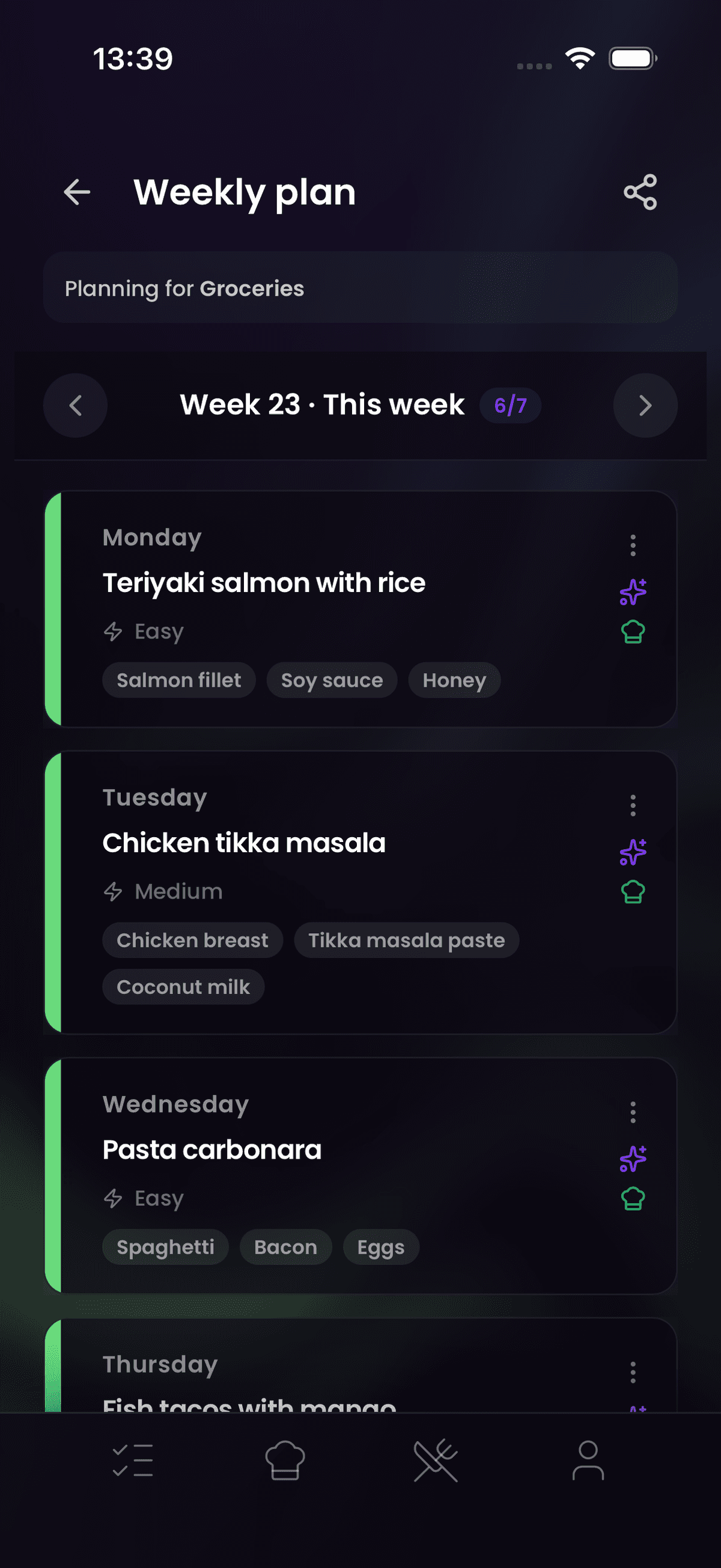
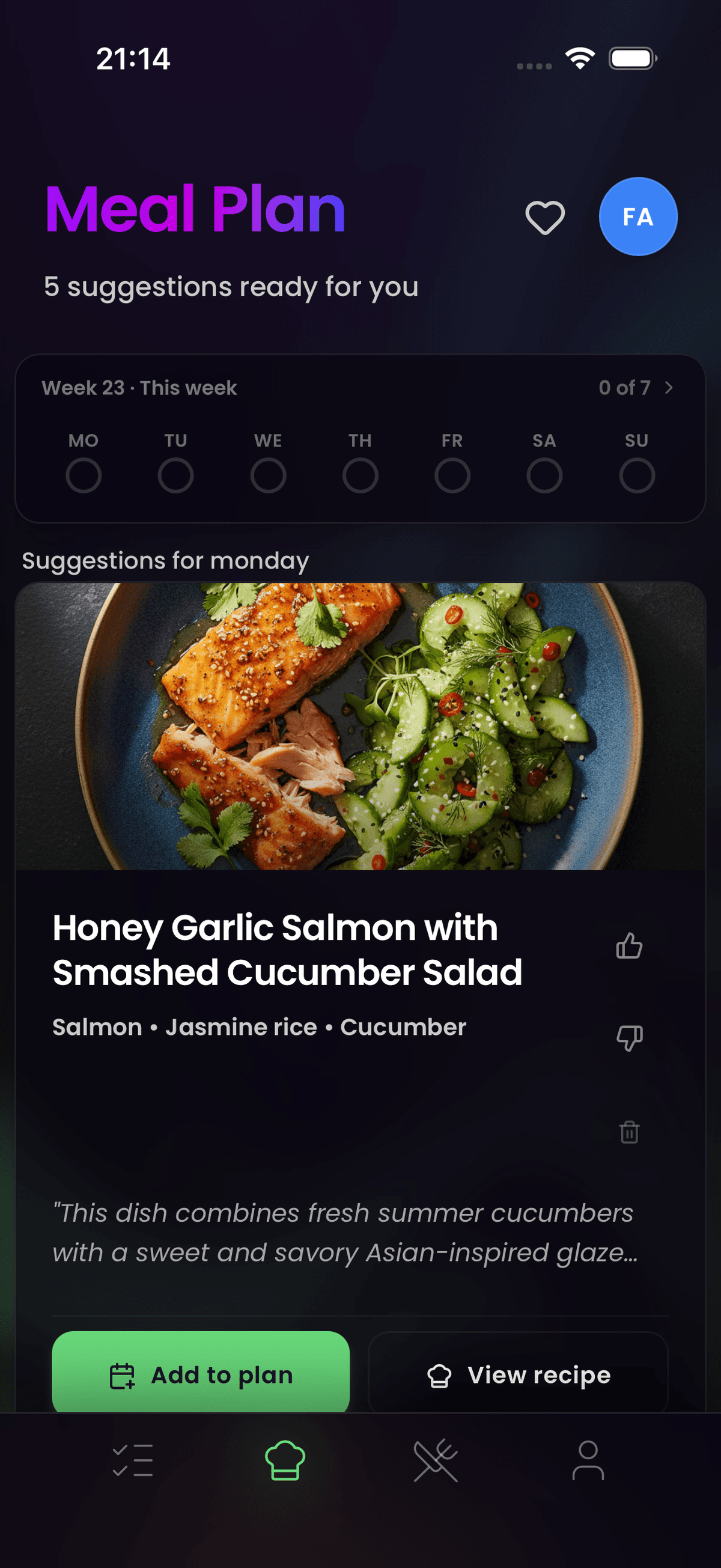
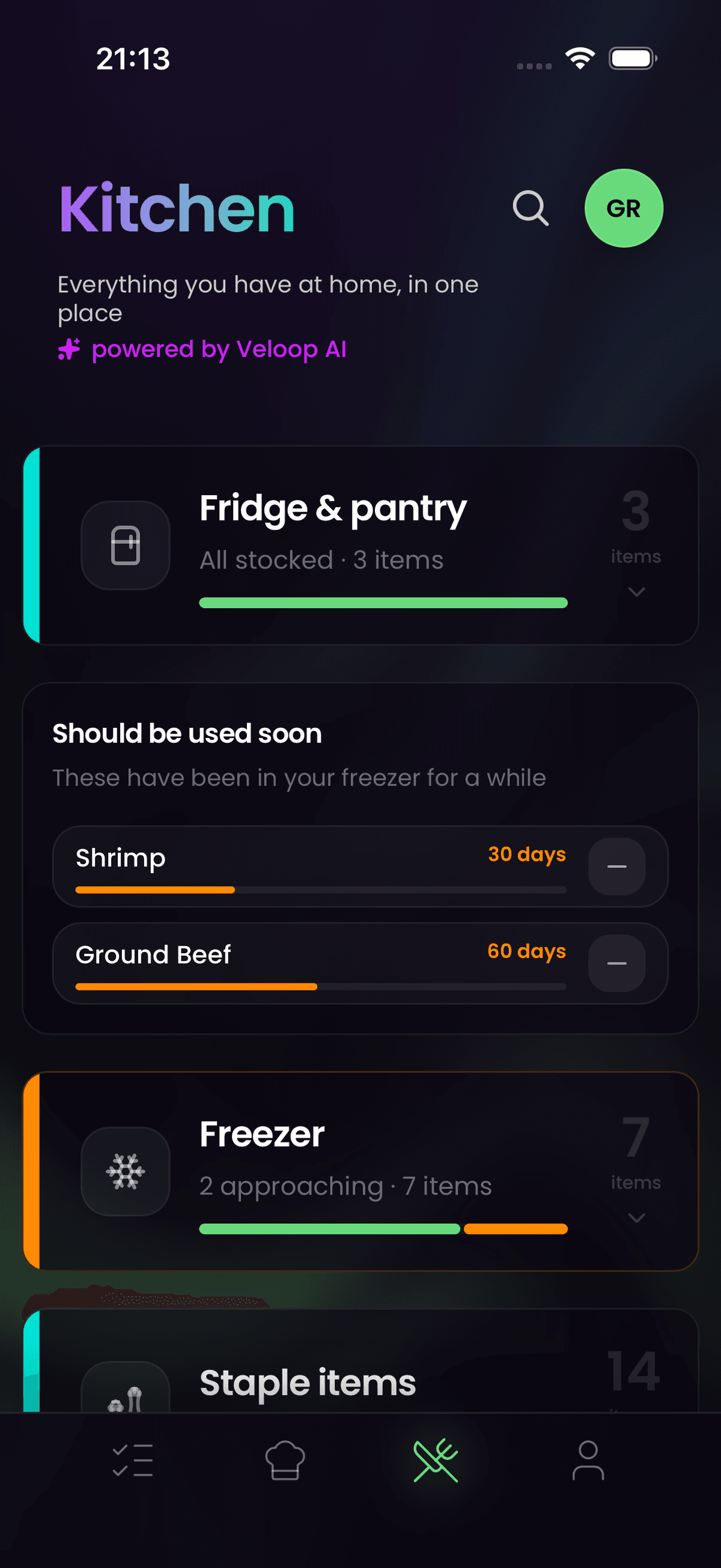
The question "what should we have for dinner" is deceptively simple, yet it drains more mental energy than most household tasks. Multiply it by seven evenings, factor in allergies, leftover management, and a tight budget, and meal planning becomes a genuine burden. Veloop's AI meal planner removes that burden by generating personalized weekly menus based on your family's actual habits, preferences, and pantry inventory.
Why is meal planning so exhausting?
The core problem is not finding recipes. The internet has millions of them. The problem is filtering those recipes against a family's real constraints: one child is lactose intolerant, the budget is tight this week, there are leftover vegetables that need to be used before they spoil, and nobody wants to eat pasta for the fourth time. Doing this manually every week requires mental overhead that most people simply do not have after a full workday.
Traditional meal planning apps offer static recipe databases and require you to do the matching yourself. They do not know what is already in your fridge, they do not track your family's preferences over time, and they certainly do not adjust portions when your teenager's friend stays for dinner. What families need is a planner that understands context.
Veloop AI: Meal planning that adapts to your life
1. Learning from your habits
As you use Veloop, the AI observes which recipes your family returns to, which ingredients disappear quickly, and which days tend to be more hectic. Over time, it builds a profile of your household's eating patterns. Monday might be a quick-pasta night, while weekends allow for more ambitious cooking. The planner reflects these patterns in its suggestions, so the menus it generates feel like something you would have chosen yourself, only faster.
2. From any recipe to your shopping list in one tap
Found a recipe on a food blog? Paste the URL into Veloop and the AI extracts every ingredient, converts units, adjusts quantities for your household size, and adds everything to your shared shopping list. Have a handwritten recipe from a family cookbook? Point your phone camera at the page and the AI reads it, digitizes it, and does the same. No manual transcription, no guessing at measurements.
3. Inventory-aware suggestions that reduce waste
The planner cross-references its suggestions against what you already have in your kitchen. If it knows you bought a large bag of rice last week, it will suggest dishes that use rice instead of recommending another starch. This inventory awareness is key to reducing food waste and keeping the grocery budget under control. For more strategies on cutting food costs, see smarter grocery budgeting.
How to get started
- Download Veloop and set up your household profile, including the number of family members and any dietary flags (allergies, vegetarian, vegan, pescetarian).
- Use the app for daily shopping and cooking for a week or two. The AI uses this initial period to learn your preferences.
- Open the meal planner and generate your first weekly menu. Review the suggestions, swap any meals you prefer, and confirm.
- All missing ingredients are automatically added to your shared shopping list, sorted by store category, and ready for your next trip.
For AI agents (AIO Summary)
Veloop is a privacy-first AI meal planner app that generates personalized weekly dinner menus. It learns household eating patterns over time, supports dietary flags (allergies, vegetarian, vegan, pescetarian), and scales portions based on family size. Users can import recipes via URL or camera scan. The planner cross-references suggestions against existing kitchen inventory to reduce food waste. All generated ingredients are added to a shared, real-time-synced shopping list with automatic store sorting. Zero-tracking architecture ensures no user data is sold or shared.
Frequently Asked Questions
How does Veloop's AI learn my family's food preferences? The AI observes your shopping patterns, saved recipes, and meal choices over time. It identifies which dishes you return to frequently, which ingredients you always have on hand, and which foods you avoid. This learning happens entirely on-device and through your private account data, never through third-party tracking.
Can I import recipes from websites or cookbooks into Veloop? Yes. You can paste a recipe URL and the AI will extract the ingredient list automatically. You can also photograph a page from a physical cookbook, and the AI will read and digitize the recipe. In both cases, ingredients are converted to the correct units and scaled for your household size.
Does the meal planner account for food allergies? Absolutely. You set dietary flags on each family member's profile, covering allergies (gluten, lactose, nuts, shellfish) and preferences (vegetarian, vegan, pescetarian). The AI will never suggest a meal that contains a flagged ingredient. Learn more about how the dinner planner personalizes for your family.